Warning, everything here is a spoiler.
The third season of H2O - Just Add Water was very different from the first two in many ways. The obvious one is that there were major changes in the cast. There were also major changes in the way the show was written.
The first season presented the girls as women with super powers who also happened to change into mermaids when wet. They used their powers regularly, often in trivial ways. In several episodes they were not even shown as mermaids. The second season split between the two. They still used their powers but they were shown as mermaids in every episode.
The third season was the opposite of the first season. Every episode had the girls as mermaids but they only used their powers occasionally.
Continuity was handled differently. In the first season there was a lot of background continuity. This involved things that were easily picked up by the audience like Zane seeing a mermaid tail. Except for the season finale, major plots were not carried over from one episode to the next. The second season had some story arcs that spanned multiple episodes but there were still many stand-alone episodes.
By the third season, continued story arcs were the rule rather than the exception. The season almost feels like chapters in a novel where the first season was a series of stories about a set of characters. The episodes are also much more serious. There is only one out and out comedy episode involving a floating bubble of water with a fish in it. Strangely this was shown out of sequence and continuity is so tight that this is painfully obvious.
There were two major story arcs. The first was about a tendril of water that formed in the moon pool during the full moon. It is featured in all five full moon episodes and is part of the A or B plot in most other episodes.
The second story arc is the romance between the new mermaid Bella and Will, a free diver (someone who competes to see how deep he can dive). It takes the entire season before they actually get together and the romance is handled very realistically. Bella was interested in Will from the beginning but it took him a while to reciprocate. After learning that she was a mermaid he became so excited with that side of her that she broke off the relationship for a while. There was also some question about which mermaid Will was interested in after Rikki saved his life. This was a great contrast to Emma's "I hate you, let's date" relationship in the second season.
Rikki and Zane's relationship evolved and eventually fell apart. Zane reopened the juice bar, naming it after Rikki and having her managing it. It was obvious that she did all the work while he played. As always, Zane managed to screw up their relationship then tried to fix things after they broke up.
Apparently Zane really needed Rikki's management. After she left he was regularly shown actually working at his desk instead of playing. Even with that, the bar was on the verge of closing within a few weeks of Rikki's departure.
Rikki as a character grew the most during the show's run. By the third season, she was the most mature character in the cast (although she still blew off studying and was skeptical of science). All of this was consistent with her character.
After being the center of the second season, Cleo got little attention in the third season. She still fought with her sister. Her divorsed father met someone new and got married. Lewis left for America and Cleo took over his role as chief scientist for the group.
All told, the season was better-written and more realistic that the first two. There were few cringe-worthy moments or relationships played just for laughs.
A Classic Mermaid
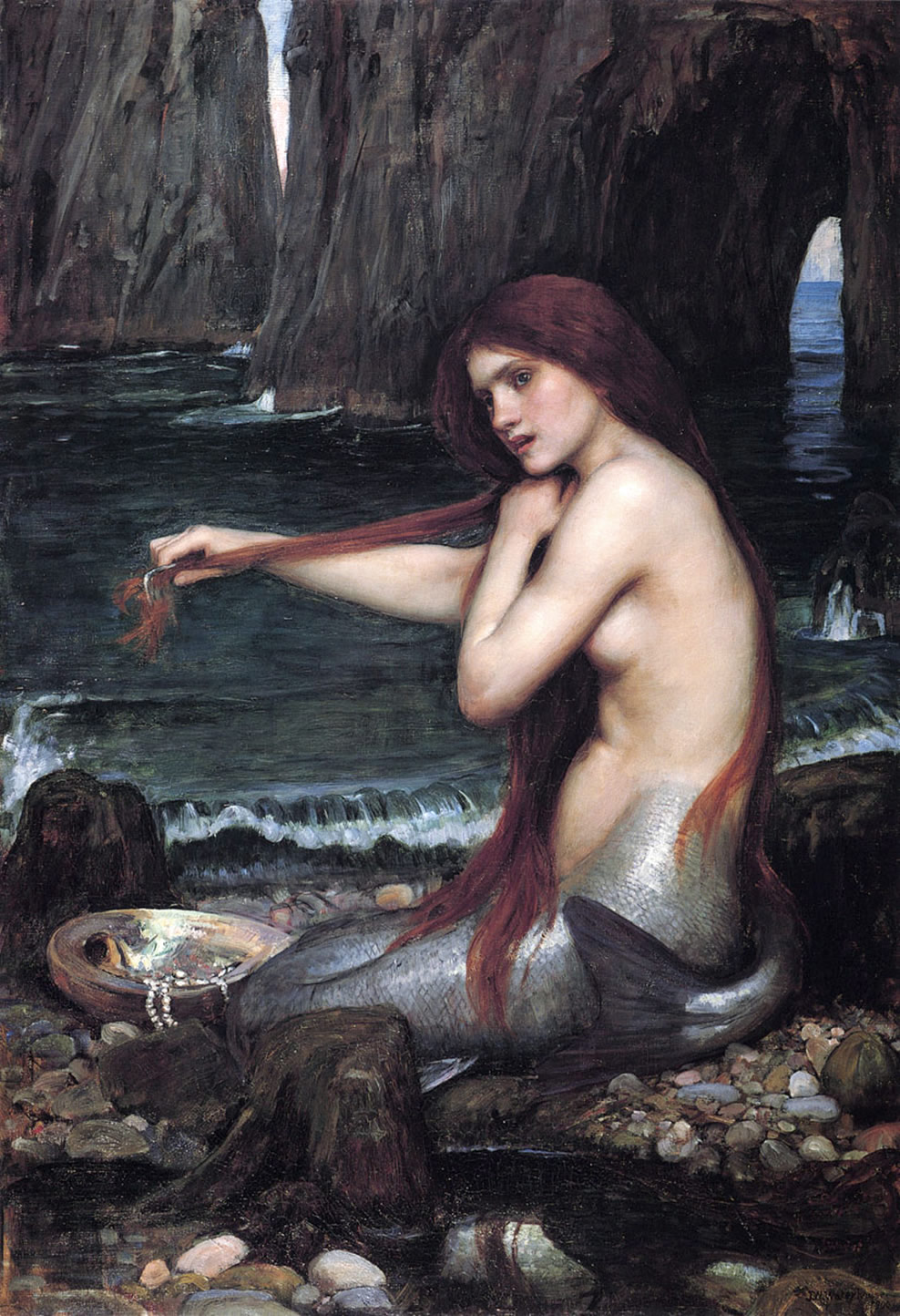
A Mermaid by John William Waterhouse
Friday, February 1, 2013

Friday, January 25, 2013
H2O - Just Add Water, Season 3 - changes
Originally H2O - Just Add Water was planned as a two-season show but it was popular enough that a third season was added. The third season was different in several ways from the first two. A large part of the cast changed, relationships were redefined, and the general tone of the series was more serious.
The biggest change was the departure of Emma and the introduction of Bella. I didn't actually miss Emma a bit. Where Emma tended to be a one-dimensional obsessive/compulsive, Bella came across as a real person.
The way the other two accepted Bella was handled well and fit prior characterization. Cleo's reaction was, "Another mermaid - let's be friends." Rikki, who was a;ways slow to make friends, was much more reserved. The two were initially suspicious of each other which changed after Rikki's predictions about Nate came true.
After that, Rikki and Bella bonded quickly. Riki needed a new swimming buddy. In the first two seasons Rikki and Emma spent more time swimming with each other than either spent with Cleo. With Emma gone, Rikki had someone new to swim with although Bella was playful where Emma was competitive. Also, both of them were only-children who had moved a lot so they had more in common with each other than with Cleo (more on this later). Rikki seemed like Bella's older sister.
Even through the three were supposed to be the same age, Rikki matured the most. She was still Rikki - she didn't study, was skeptical about science, and rude to Lewis. But in the opening episode, Zane announced that he was reopening the juice bar based on an idea that Rikki had and that she would be managing it. She actually did a good job of it.
This was not a total surprise. In the first season she worked at the juice bar for a short time and did so well that she was almost promoted to assistant manager (she purposely lost the job so that she would not replace Emma). She also showed hidden maturity in the first season in her reaction to Zane's father wanting to develop Mako Island.
On the other hand, Zane showed that he had not matured at all. For most of the season he let Rikki do the work while he played. He also cheated. The relationship was on a downward spiral most of the season until the inevitable breakup (although the show ended with Zane trying to win Rikki back again).
In the first two seasons a major focus of the show had been on family. Cleo and Emma had full families. Zane's father was in several first season episodes. Rikki's father appeared in a couple second season episodes as did Charlotte's mother.
In the third season, Cleo's family was still around (minus her mother who disappeared between the first and second seasons). She even got a nice step-mother. We never heard a word about Rikki's father (maybe he moved on and she was living by herself). We heard about Bella's parents but never saw them.
Then there was Will, Bella's love interest. His parents let him live by himself in an old boathouse. We never saw them but his older sister, Sophie, is a regular.
Sophie is what I expected 2nd season's Charlotte to be - drop-dead gorgeous, self-centered, amoral, and manipulative. She didn't approve of her brother dating Bella and went to lengths to stop it.
Without Emma, all references to the 1950s mermaids were dropped and eventually the girls got new necklaces.
The final change is that the actor who played Lewis left the series half-way through and was reduced to minor supporting character in half of the episodes he did appear in.
Next post I will discuss the story arcs.
The biggest change was the departure of Emma and the introduction of Bella. I didn't actually miss Emma a bit. Where Emma tended to be a one-dimensional obsessive/compulsive, Bella came across as a real person.
The way the other two accepted Bella was handled well and fit prior characterization. Cleo's reaction was, "Another mermaid - let's be friends." Rikki, who was a;ways slow to make friends, was much more reserved. The two were initially suspicious of each other which changed after Rikki's predictions about Nate came true.
After that, Rikki and Bella bonded quickly. Riki needed a new swimming buddy. In the first two seasons Rikki and Emma spent more time swimming with each other than either spent with Cleo. With Emma gone, Rikki had someone new to swim with although Bella was playful where Emma was competitive. Also, both of them were only-children who had moved a lot so they had more in common with each other than with Cleo (more on this later). Rikki seemed like Bella's older sister.
Even through the three were supposed to be the same age, Rikki matured the most. She was still Rikki - she didn't study, was skeptical about science, and rude to Lewis. But in the opening episode, Zane announced that he was reopening the juice bar based on an idea that Rikki had and that she would be managing it. She actually did a good job of it.
This was not a total surprise. In the first season she worked at the juice bar for a short time and did so well that she was almost promoted to assistant manager (she purposely lost the job so that she would not replace Emma). She also showed hidden maturity in the first season in her reaction to Zane's father wanting to develop Mako Island.
On the other hand, Zane showed that he had not matured at all. For most of the season he let Rikki do the work while he played. He also cheated. The relationship was on a downward spiral most of the season until the inevitable breakup (although the show ended with Zane trying to win Rikki back again).
In the first two seasons a major focus of the show had been on family. Cleo and Emma had full families. Zane's father was in several first season episodes. Rikki's father appeared in a couple second season episodes as did Charlotte's mother.
In the third season, Cleo's family was still around (minus her mother who disappeared between the first and second seasons). She even got a nice step-mother. We never heard a word about Rikki's father (maybe he moved on and she was living by herself). We heard about Bella's parents but never saw them.
Then there was Will, Bella's love interest. His parents let him live by himself in an old boathouse. We never saw them but his older sister, Sophie, is a regular.
Sophie is what I expected 2nd season's Charlotte to be - drop-dead gorgeous, self-centered, amoral, and manipulative. She didn't approve of her brother dating Bella and went to lengths to stop it.
Without Emma, all references to the 1950s mermaids were dropped and eventually the girls got new necklaces.
The final change is that the actor who played Lewis left the series half-way through and was reduced to minor supporting character in half of the episodes he did appear in.
Next post I will discuss the story arcs.
Tuesday, January 15, 2013
Review - Fathoms of Forgiveness
Fathoms of Forgiveness by Nadia Scrieva is the second of the four-book Sacred Breath series. It is the sequel to Drowning Mermaids.
The people in this series are not traditional mermaids - they look human and are genetically close enough to interbreed with normal humans. The main difference is that they have an extra set of lungs that can extract air from water. The Title of the first book refers to their traditional means of execution - stabbing through the lungs. The only way a mermaid can drown is through internal hemorrhaging.
The first book was fairly light. The second one is much, much darker. It picks up right where the first one ended but the focus changes. The first book had a lot of talking and romance. The second picks up in the middle of a war. Much of the book focuses on Visola, the red-haired warrior and her relationship with her estranged husband. Unfortunately, with these two warriors, a reunion means multiple deaths, broken limbs, and attempted suicide.
As with the first, the book is well-written with strong characterization. The undersea culture is well thought out and seems possible.
I would not recommend this for teens. Parts of it are disturbing.
The people in this series are not traditional mermaids - they look human and are genetically close enough to interbreed with normal humans. The main difference is that they have an extra set of lungs that can extract air from water. The Title of the first book refers to their traditional means of execution - stabbing through the lungs. The only way a mermaid can drown is through internal hemorrhaging.
The first book was fairly light. The second one is much, much darker. It picks up right where the first one ended but the focus changes. The first book had a lot of talking and romance. The second picks up in the middle of a war. Much of the book focuses on Visola, the red-haired warrior and her relationship with her estranged husband. Unfortunately, with these two warriors, a reunion means multiple deaths, broken limbs, and attempted suicide.
As with the first, the book is well-written with strong characterization. The undersea culture is well thought out and seems possible.
I would not recommend this for teens. Parts of it are disturbing.
Sunday, December 30, 2012
Frankenstein and the Mermaid

http://www.retronaut.com/2012/12/frankenstein-and-the-mermaid/frank/
“”Mr. Peabody and the Mermaid” was shooting near a set
where “Abbott and Costello Meet Frankenstein” was filming. Tourists
were shocked to see Glenn Strange’s Frankenstein Monster having lunch
with Ann Blyth in her fishtail costume. Both Strange and Lon Chaney in
his Wolfman make-up were invited to the Mr. Peabody wrap party, where
they hammed it up in make-up.”
- IMDb
- IMDb
Wednesday, December 26, 2012
Glaucus
Usually mer-folk are born that way or at least have an undersea ancestor. Glaucus is an exception. He began as a normal human although he was unusually skilled at building boats. He built the Argo which Jason used on his quest for the golden fleece.
One day he noticed that the fish he caught were reviving and escaping back into the water. It turned out that he had dumped his catch on a strange herb and it was responsible.
Glaucus tried the herb and felt a compulsion to dive into the water where he changed into a merman with green hair. He learned prophesy and became known for helping sailors in distress.
A different version has Glaucus plunging into the ocean during the fight between Jason against the Tyrrhenians. Glaucus sunk to the bottom of the sea and was transformed.
One day he noticed that the fish he caught were reviving and escaping back into the water. It turned out that he had dumped his catch on a strange herb and it was responsible.
Glaucus tried the herb and felt a compulsion to dive into the water where he changed into a merman with green hair. He learned prophesy and became known for helping sailors in distress.
A different version has Glaucus plunging into the ocean during the fight between Jason against the Tyrrhenians. Glaucus sunk to the bottom of the sea and was transformed.
Wednesday, December 12, 2012
Review: Drowning Mermaids
Drowning Mermaids (Sacred Breath, Book 1) by Nadia Scrieva
This is not your typical mermaid novel. For one thing, the mermaids have legs instead of fishtails. Als, it is written for a more mature audience - not that it contains adult subject matter, it just has content that will interest adults.
The aging captain of a fishing boat takes his crew to a stipper bar to unwind after losing a crew member. There he becomes entranced with a young stripper and invites her to be his house guest along with her two sisters.
Actually, she is over six hundred years old and ruler of an undersea kingdom. Even her youngest sister is 90 but looks 10. They are on the surface to raise money in order to buy weapons to defend their kingdom from aggressors.
This is a very well-written book. All of the plot twists were thought out in advance. The characters are well-developed and each has a distinctive way of speaking.
This book avoids one of the big traps of mermaid books - the undersea world is fully integrated with the modern world. Too often the undersea parts seem dreamy and indistinct compared with the modern world but not here.
Also, the writing itself is compelling enough to keep up interest even though very little actually happens in the first half.
One warning - while this is novel-length, it breaks off abruptly and is continued in the next novel. The first one is free (as an e-book) just to get you hooked. I've already bought the sequel.
This is not your typical mermaid novel. For one thing, the mermaids have legs instead of fishtails. Als, it is written for a more mature audience - not that it contains adult subject matter, it just has content that will interest adults.
The aging captain of a fishing boat takes his crew to a stipper bar to unwind after losing a crew member. There he becomes entranced with a young stripper and invites her to be his house guest along with her two sisters.
Actually, she is over six hundred years old and ruler of an undersea kingdom. Even her youngest sister is 90 but looks 10. They are on the surface to raise money in order to buy weapons to defend their kingdom from aggressors.
This is a very well-written book. All of the plot twists were thought out in advance. The characters are well-developed and each has a distinctive way of speaking.
This book avoids one of the big traps of mermaid books - the undersea world is fully integrated with the modern world. Too often the undersea parts seem dreamy and indistinct compared with the modern world but not here.
Also, the writing itself is compelling enough to keep up interest even though very little actually happens in the first half.
One warning - while this is novel-length, it breaks off abruptly and is continued in the next novel. The first one is free (as an e-book) just to get you hooked. I've already bought the sequel.
Wednesday, December 5, 2012
Mermaid Technology
Mermaids are usually depicted as naked. If they carry anything, it is a comb and mirror. This shows just how alien life in the sea would be from life on land.
The basic building blocks of technology were fire, rocks, and wood. There is evidence that cooking food predates modern humans and that the extra calories gained from cooking food allowed us to develop our larger brains.
But there is no fire underwater.
Tool-making also predates humanity. These were a combination of stone and wood. Knives and scrapers were made from hard, brittle stone like flint but spears began as pointed wood with stone heads being added later. Flint is hard to come by on land or sea but the initial impulse to pick up a stone and use it is not as obvious when stones are as close as your feet. And wood just doesn't grow underwater.
The main tools that mer-folk would have to work with are shells and coral. Coral is soft enough that it could be worked with shells although there are limits on what can be made. Traditionally mer-folk have made things like necklaces and bras from sea shells but that would require drilling holes in the shells. How would this be done?
Clothing is its own issue. The first clothing was made from animal skins that had been dried and later tanned. It was worn to protect humans from the weather.
While you can make leather from many sea creatures, it cannot be done underwater. Also there is little point. Sea people would not need protection from the sun or rain and leather will not keep you warm in the water. Also, wearing clothes does not affect travel appreciably in the air but can slow you down underwater.
All of this is an intellectual exercise. Novelists depicting mermaid civilizations have to account for these things or their civilizations will feel off. If the mer-people live in set villages then the novelist has to explain why. What is the benefit of this way versus living in a constantly-moving school like dolphins? If they make things then the novelist has to know how and why.
This is a problem in some of the mermaid novels I have read. The set-up is detailed, down-to-earth. Then the lead character travels to a mermaid settlement and the tone becomes dreamy. The change can be jarring.
Granted, it is much easier to describe existing civilization than to make one up from scratch and still seem authentic. Thinking through these questions would help. How did the mermaid civilization develop and why don't they live like dolphins? If you can sell this to yourself then you can sell it to the world.
The basic building blocks of technology were fire, rocks, and wood. There is evidence that cooking food predates modern humans and that the extra calories gained from cooking food allowed us to develop our larger brains.
But there is no fire underwater.
Tool-making also predates humanity. These were a combination of stone and wood. Knives and scrapers were made from hard, brittle stone like flint but spears began as pointed wood with stone heads being added later. Flint is hard to come by on land or sea but the initial impulse to pick up a stone and use it is not as obvious when stones are as close as your feet. And wood just doesn't grow underwater.
The main tools that mer-folk would have to work with are shells and coral. Coral is soft enough that it could be worked with shells although there are limits on what can be made. Traditionally mer-folk have made things like necklaces and bras from sea shells but that would require drilling holes in the shells. How would this be done?
Clothing is its own issue. The first clothing was made from animal skins that had been dried and later tanned. It was worn to protect humans from the weather.
While you can make leather from many sea creatures, it cannot be done underwater. Also there is little point. Sea people would not need protection from the sun or rain and leather will not keep you warm in the water. Also, wearing clothes does not affect travel appreciably in the air but can slow you down underwater.
All of this is an intellectual exercise. Novelists depicting mermaid civilizations have to account for these things or their civilizations will feel off. If the mer-people live in set villages then the novelist has to explain why. What is the benefit of this way versus living in a constantly-moving school like dolphins? If they make things then the novelist has to know how and why.
This is a problem in some of the mermaid novels I have read. The set-up is detailed, down-to-earth. Then the lead character travels to a mermaid settlement and the tone becomes dreamy. The change can be jarring.
Granted, it is much easier to describe existing civilization than to make one up from scratch and still seem authentic. Thinking through these questions would help. How did the mermaid civilization develop and why don't they live like dolphins? If you can sell this to yourself then you can sell it to the world.
Subscribe to:
Posts (Atom)